Will it be okay? I ask the nothing that surrounds me—awaiting an answer that won’t come. The silence renders me indecisive. I take a seat on the rubbish beneath me and ponder the quiet, its dead sounds of ancient time dripping by like gelatinous quivering aches of life. Do I scream? Do I shake and holler? Do I sit? The placid stagnancy echoes through me, penetrating my bones, scratching beyond the nerve to a place I cannot obtain. Perplexity grasps my mind and leaves me breathless, aiming nowhere and heading down fast. I embrace it, I inhale it with gasping breaths, devour it with gnawing teeth, and rest in silence awaiting my time…
I finished it. Finally finished it. After pages and pages had been pillaged, bagged, smoked, rewrote, gouged, burned, reversed, jumbled, rewritten again, and again, smashed to oblivion, and finally written again. It’s finished.
I sigh with a joyous breath of calm and scan through, marking everything, editing every sentence, and character that’s gleaming out from every page. I smile with a slight grimace, unsure, where’s this unsurity ensuing from? Why don’t I celebrate? I’m done. But there’s so much more to this isnt there?
Why did I rush this? Why did I dedicate the last two and a half years to this, and then, here near the end, blast through with an urgent rapping at the helm? I’d scoured every page front and back, edited from beginning to end, and gave my friend a rounded, well-thought-out, polished version of his life story. Commas are in place, run-on sentences excised, paragraphs etched and modeled to represent the best of this man. I didn’t want to take away the easy-going nature of John’s character and spirit, so I let him write from his point of view as it is when it is. Something is moving in his writing as though he remembers these old memories and moments as though they happened in the now. I find it comforting, and I enjoy the way he recalls this and that so effortlessly. And now I’m done.
So why is there a hollow feeling within? Why does my heart feel heavy? I’m proud of my work and being finished, but there’s a salt to the air and my breath holds.
He’s dying, matter of fact. Two weeks ago, he’d told me of his diagnosis. I felt stunned, distraught, and a harrowing sadness digging deeper than I’d expected. He hadn’t smiled, giving this information; if so, it was meek and quick, but he told me sincerely and with not a quiver in his throat. I tried to stay collected and calm, remembering I’m not dying, well, not like he is, and this isn’t about me. But then I think of him and how he’s become a surrogate father and a great friend, how he’s introduced me to the calmness of being and gentleness of the heart that leaves me feeling cleansed and detoxed of the poisons from my past. He’s taught me how to allow forgiveness from others and what it means to be humble. He’s shown me humility and grace, and I’m left here, not knowing what to say to him to thank him.
Now, thinking in the darkness, writing this out, I think I know why I pushed it out quickly, like ripping a band-aid off. I’m afraid of saying goodbye, but want to give him the gift of a finished book before he’s gone.
It seems contradictory to the unspoken wants left behind, meaning plenty but never being mentioned, and to die with what’s to come.
I question life and its complexity, I ponder the will of man and how we choose to go forward, though there’s no direction without warning.
I gaze toward the sky with a peering eye for salvation. That only comes from within, yet I grasp at the imaginable, the dreaming mind that falters at a whisper.
There’s a wind at my back, pushing, pushing, agonizingly pushing me toward a precipice unknown. I hesitate for just a moment and decide to let it lead toward my destiny. Will I falter? Will I fail? Will I fall?
Do you gaze onward, looking for brighter pastures? Does it bring a flutter to the heart, a speed to the feet?
There’s an ancient song in the air, something somber yet sweet cascades over the howling winds and takes hold of the spirit, takes hold of life, takes hold of the breath.
I wonder through the years, taking stock of my misfortunes and grateful offerings, taking heed of the warnings I hadn’t seen before, and shaking my head at so many mistakes.
Do you gaze at the moon? Do wonder like me what could have been and isn’t?
I fixate on tragedy, the comedy of it all, and finally understand Shakespeare. There is never sweetness without the sour.
My mind like a sieve, showers many a thought being left for dead, struggling behind me, gasping for air like a dying fish rescued from drowning.
The crickets chirp softly while the burling roll of traffic glides on by. It’s nearly silent tonight. Even the dogs rest idly by peering through the fence at nothing but space free to roam. I pity them, though love them dearly. This concrete jungle isn’t for them. They need green, they need freedom.
I look at them with heavy eyes, sullen with guilt for taking them…but where would they be if not here?
The catching gleam of sound, something grasps hold of the spirit and rides a current of passion enclenched within terror.
The heart beats rapidly, freely, gaining wings from the ecstasy of music cascading the soul.
Sweet melodies caress endearing spirits waiting to take flight.
It is like pulling teeth with a screwdriver. Writing that is. I’ll have these tendrils of an idea that I try to grasp and spin, but it runs from my hands like slippery sinew. I hesitate and cower at the helm with pen in hand, waiting to scribble something better than nothing. But I pause and tremble at the thought. Why?
Because I’m not who I used to be, and the shell of what I’ve become is dry and brittle. My mind is something else nowadays, too, that leaves me shielding away from what i dream of doing on a daily but still I hesitate and leave it bare.
It’s not that I’m incapable, I’m nervous of what I’m capable of or not now, anxious that it’s senseless dribble seeking an ear, meaning to be read. I wait. Take the pen to paper and let it go. The everlasting joys of writing eeks out like a clogged fountain pen spurting out bits and pieces. It’s not effortless anymore. I take to that helm so delicately, nervous that I’ll pierce through the otherside looking for a better route but that’s not right. Is it?
It clammers at the head, chisels at my heart and begs to be splayed out. What to do?
I sit there in the red Toyota C-RV. He’s pulling out of the driveway hesitantly and smiling with admiration and a simple joy of camaraderie. I gaze out the window watching him drive, which I always do. He’s 86, and though his driving doesn’t have a mark, he has his moments on the road that have me scratching my scalp. The exit is dignified and we set out to our spot the usual talk emits and we honor each other with a joyous hello and ‘how’s it going?’
Little did I know the news today would be something so unsettling, tears came without warning. He smiles something smuggish and says he has cancer. “Didn’t I tell you?”
No, John. You didn’t tell me. We continue on the road and head to Julian’s, a favorite. I peer out the windows again avoiding eye contact but continue the conversation and ask him what it is?
It’s colon cancer that’s spread to his liver, stomach, and kidneys. I gawk at him with a look saying how can you be alive, but i know the answer. He’s John, he’ll last forever
The pen sits heavy in my hand, palms are sweaty and the page glares up at me with a resonance that has me shield my eyes and shake my head. I stare aimlessly down and struggle to bring the fountain head down with my squinted eyes. There’s a vibrating of tenuous pressure leaving me quivering with fear of what will take place when pen meets paper. I hesitate for only a brief moment and take aim assaulting the screaming bleached sheet. The scribbling is chaotic, misshapen but growing and gnashing at the words while they crawl away at what was once a clean piece. My heart sits heavy, presses against my ribs and agonizingly begs for more. It begins to take shape though, a resonating beam of self issues from the sheet and screams for more, hollers for a pedestal and burrows further in. What grows is not beauty, nor decrepit. It heaves with a shudder and breaths its first breath. Something becomes from nothing and takes forefront of the mind, the heart, and bleeds everlasting.
My feet are falling from the ground. Encapsulated within a bubble of fright and damage, let asunder the brain so tender. Take a twisted flicker flame to the tinder box of my mind like flint to the matchbox and let it torch my sky a’light. Darkness shrouds the curtain that drapes over my soul entrapped within the basket called life like a bacon wrapped souffle waiting for devouring teeth gnashing, gnawing, feeding off of my heart trembling, floundering, and drowning, gagging down truth like a button nosed ass. Frozen in silence, breathing gasping upon skin on skin, waiting for the cold to relinquish, and let me feel. Clawing inside, allowing the ghost to take front and center, how did I lose it so badly? Lose it so freely and epically? How oh how? Let’s go with a guess and call it crawling inside to die a shamed death of something forgotten and dead no longer clawing for life’s surging light but that’s just looking too closely. A call on the light, the moon, the shining pot of gold that is the sun, for the light brings salvation, a cleansing, and something brighter to unfold.
Refresh the socks from the night before…fold my bed and tuck it away.
Make a smoothie, an electrolyte water, and find clothes for little man.
Turn the TV on for the last ten minutes of old toons. And pack the lunch for my son. Load the backpack with the smoothie and water for the Mrs.
Wait.
Leave it to Beaver comes on and she still is getting ready, so you wait. And wait.
Then I take out the backpack after getting a hoodie on the boy and getting his bag on his back and hoist the backpack to the jeep and load it. Load the boy. Give a kiss.
Sign I love you and say goodbye!
This is my morning and the entire time my legs and back are screaming. Screaming. Screaming.
Everything has changed, I look at my previous writings. Not that they’re good or amazing but at least I had the capabilities of writing and communicating the way I want to fluently and well. MS has definitely hindered a lot. And I don’t know what to do about that. I can type, i can write, but I’m slow and it’s literally exhausting. And I ask myself what the fuck? Really, what the f***!!! And I’m at that point already Pausing and pausing and finding issues with my hands and my arms and my legs and my back and it all happens at the same time. And then what do I do I keep writing? Do I find a way to communicate? Do I use the mic like i’ve been trying to? But then I Hesitate. And pause and pause and and pause. Tasha Sultana sings behind me And i’m going crazy crazy crazy crazy.
What is your middle name? Does it carry any special meaning/significance?
The middle name, my middle name specifically, maybe it did have a meaning. Other than “little king” back in the day. Maybe. Just maybe. But I couldn’t tell you. As a younger person I resented my last name. Maybe I still do, but during that time of youth I wanted to change my middle name to my last name and swipe out Berg. That was the key to just get rid of Berg, I would have been Matthew Ryan and I liked that. I still do. But I’m married and my wife is a teacher known as Mrs. Berg the chocolate lady. Hard to do what I wanted after 14 years having the same last name.
Enjoy!
Sizzling toothpicks cinder my teeth.
So my middle name is Ryan and that is that. It does somewhere mean little King and I guess that’s cool and neat but I don’t give it much credit I don’t really think about it I use it though as much as I can and I’m definitely Matthew Ryan Berg.
Pueblo’s Ghost Walk Returns to Haunt the City Pueblo, CO – Get your screams ready! Pueblo’s wondrous annual Ghost Walk will be returning triumphantly, inviting thrill-seekers and history buffs alike to embark on a chilling and most mystifying journey through the city’s haunted past.
This year’s event will take place on 9/27/2024, 9/28/2024, 10/4/2024, 10/5/2024, 10/11/2024, and 10/12/2024. The downtown locations will open from 5:00 pm to 8:00 pm. Participants will gather at the Pueblo Historic Union Avenue & Riverwalk District – beginning and ending at Fuel and Iron Food Hall. Participants will gather here to embark on a guided tour led by knowledgeable local historians who will share the grizzly details of ghastly and ghostly encounters, mysteries, and tragic events that have shaken a mark on Pueblo.
As the sun sets, attendees will explore the city’s iconic landmarks and hidden corners, each with its own spine-tingling stories. Every step will be filled with suspense and anticipation, from the haunted theaters to the eerie cemeteries that bring screams in the dark.
Don’t miss this opportunity to experience the supernatural side of Pueblo. Tickets are now on sale and can be purchased online at sharepuebloevents.com and at participating restaurants. See Sacred Bean, Bingo Burger, B Street Cafe and More! Don’t miss this amazing opportunity to walk down spook lane and venture into the history of what crawls and slithers.
BLOG POST
A Haunting and Spirited Adventure: Pueblo’s Ghost Walk The Pueblo Ghost Walk is back and promises to send shivers down the spine and have you scream! This annual event invites thrill-seekers and history buffs alike to embark on a chilling adventure through the city’s haunted past.
As the sun sets, you’ll be invited to join us for a guided tour led by knowledgeable local historians who share tales of ghastly encounters, mysteries, and the tragic events that have left Pueblo shaking. Explore iconic landmarks and our city’s hidden corners, each with its own spine-tingling story.
Follow us to haunted theaters and the eerie cemeteries, where every step brings suspense and anticipation. Feel the presence of the supernatural as you wander through the city’s dark and mysterious past.
Whether you believe, are skeptical, or just in the mood for a good scare, Pueblo’s Ghost Walk is an unforgettable experience. Don’t miss the opportunity to get spooked and find an unturned stone in Pueblo’s history. Tickets are now on sale and can be purchased online and at supporting restaurants. See Bingo Burger, Sacred Bean, B Street Cafe and more!
Gold Nanoparticles, something so innocuous and we’re at the ground floor of this discovery.
This PRESS RELEASE is about gold nanoparticles reversing the brain deficits in multiple sclerosis and Parkinson’s disease. WOW!! I mean it, as someone diagnosed with multiple sclerosis this is beyond
d a breakthrough…it’s an opportunity.
At UT Southwestern Medical Center, a new treatment is being investigated called CNM-Au8. This treatment consists of gold nanocrystals that are curated to improve brain function. That alone is a promise, the mere inclusion of improvement revitalizes something within that wants to fight to see. What is being produced at UT Southwestern is a collection of studies that are showing promise in using CNM-Au8 to treat neurodegenerative diseases. The results from phase two clinical trials showed that CNM-Au8 improved the NAD+/NADH ratio in patients with MS and Parkinson’s disease. This ratio is linked to energy metabolism in the brain, and increasing it may improve function. Patients with Parkinson’s also reported experiencing improved motor function. More studies are needed, but these results are promising.
We are more than excited here at SoCO Health & Mind to see what discoveries are uncovered next.
A Collaborative Spotify Playlist– The collaborative Guide
1. Introduction
This document provides a step-by-step guide on how to create and manage a collaborative playlist on Spotify. A collaborative playlist allows multiple users to add, remove, and rearrange songs, making it ideal for parties, group projects, or simply sharing musical tastes with friends.
2. Target Audience
This guide is intended for individuals who are familiar with the basic functionality of Spotify, including navigating the interface and playing music. No prior experience with playlist creation or collaborative features is assumed. The guide is designed for users of all technical skill levels, from beginners to intermediate users.
3. Prerequisites
A Spotify account (free or premium).
A device with the Spotify application installed (desktop, mobile, or tablet).
4. Creating a Collaborative Playlist (Mobile App)
This section details the process using the Spotify mobile application, which is the most common method for creating and managing playlists.
Step 1: Open the Spotify App
Launch the Spotify application on your mobile device. Ensure you are logged in to your account.
Image 1
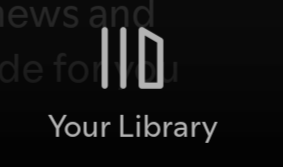
Step 2: Navigate to “Your Library”
Tap the “Your Library” icon located at the bottom of the screen. This section houses your saved music, playlists, and podcasts.
Image 2
Step 3: Create a New Playlist
Tap the “Create Playlist” button located at the top of the “Your Library” screen.
Image 3
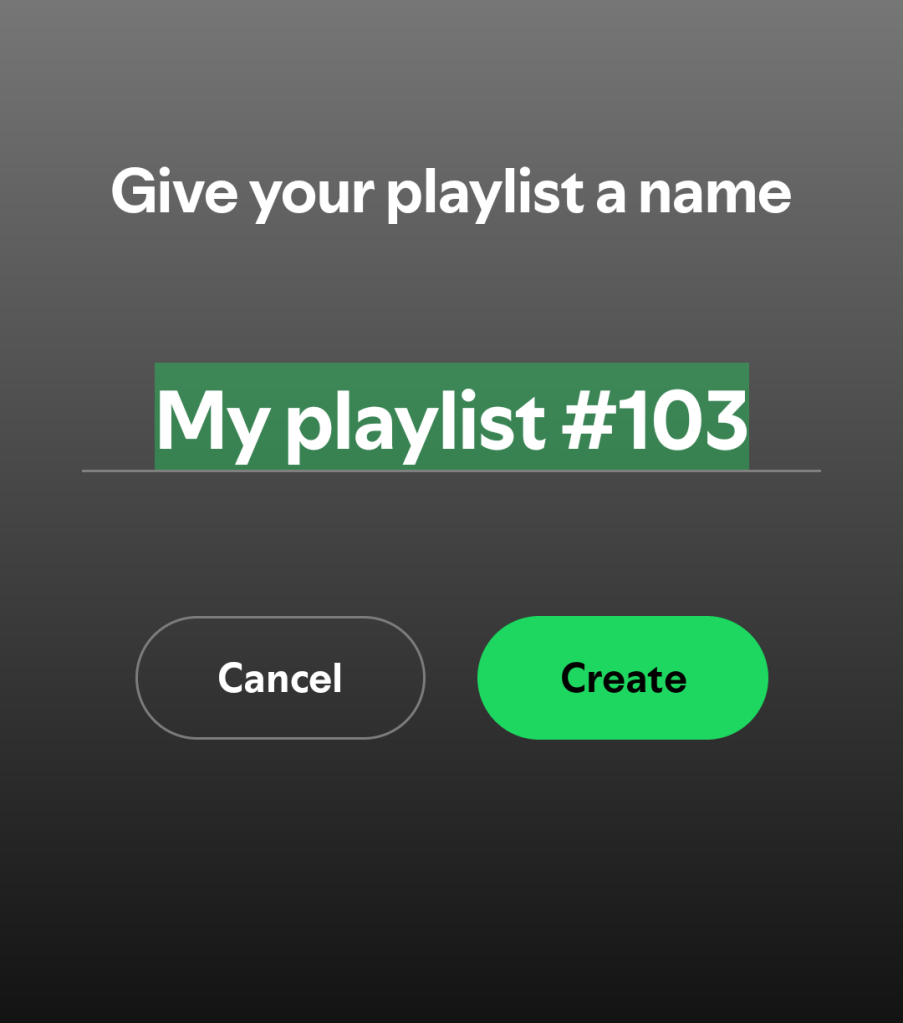
Step 4: Name Your Playlist
Enter a name for your playlist in the text field provided. Choose a descriptive and memorable name. You can also add an optional description and an image to personalize your playlist. Tap “Create” to finalize the playlist creation.
Step 5: Make the Playlist Collaborative
Once the playlist is created, tap the three dots (More Options) icon located at the top right of the playlist screen.
Image 4
Step 6: Enable Collaboration
In the menu that appears, tap the “Make Collaborative” option. The playlist is now collaborative, and other users can add songs to it.
Step 7: Sharing the Playlist
To invite others to collaborate, tap the three dots icon again and select “Share.” You can then share the playlist via various methods, such as messaging apps, email, or by copying the link.
5. Adding Songs to a Collaborative Playlist
Any user with access to the collaborative playlist can add songs.
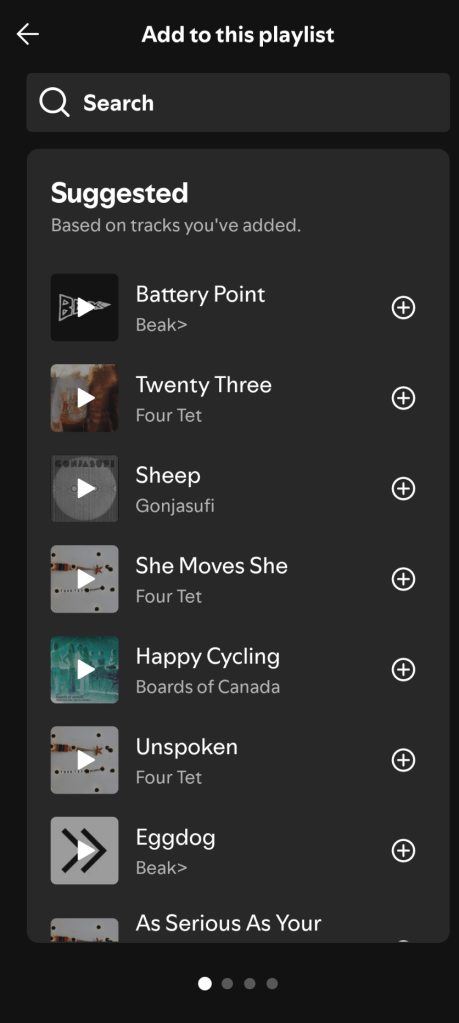
Step 1: Search for a Song
Use the search function within the Spotify app to find the song you want to add.
Step 2: Add to Playlist
Once you find the song, tap the three dots icon next to the song title. Select “Add to Playlist” and choose the collaborative playlist you want to add the song to.
6. Removing Songs from a Collaborative Playlist
Any user can remove songs they have added, and the playlist owner can remove any song.
Step 1: Locate the Song
Find the song you want to remove within the collaborative playlist.
Step 2: Remove from Playlist
Tap the three dots icon next to the song title and select “Remove from this Playlist.”
7. Managing the Playlist (Playlist Owner)
The playlist owner has additional control over the playlist, including the ability to change the playlist name, description, image, and make the playlist private again. These options are accessed through the three-dot menu on the playlist screen.
8. Conclusion
This helps users find the information they need. Including screenshots of the Spotify interface directly links the written instructions to the visual elements users will see in the app, enhancing their understanding of the process. This user-centered approach ensures that individuals can use the collaborative playlist feature on Spotify efficiently and effectively.
Summary:
This technical document provides a clear and concise guide to creating and managing collaborative Spotify playlists. The step-by-step instructions, along with visual aids, ensure that users of all technical levels can easily follow the process. The use of clearly labeled steps and straightforward language enhances readability and comprehension.
The document is well-structured, with clear headings and a logical flow, making it easy for users to navigate and quickly find the information they need. Screenshots of the Spotify interface correlate directly with the written instructions, reinforcing users’ understanding of the process. This user-centered approach guarantees that individuals can efficiently and effectively utilize the collaborative playlist feature on Spotify.
TO: BrainandLifeMagazine.org FROM: MBerg9@my.gcu.edu, ntimryan@gmail.com.
Below is my argument for the next headline story for Brain and Life Magazine this coming month. I’ve developed a comprehensive, well-rounded approach addressing what the article can be. I hope it brings a light shining for a call to move forward.
Striking Gold: UT Southwestern Shows Promise in Using Nanoparticles to Combat Brain Disorders
Imagine a treatment for debilitating neurodegenerative diseases like Parkinson’s or Multiple Sclerosis (MS), even delivered through a simple daily drink. Yes, UT Southwestern Medical Center researchers are making significant strides toward this reality using gold nanoparticles.
Early phase-two clinical trials have shown remarkable success. Patients with MS and Parkinson’s who ingested a suspension of these gold nanocrystals for 12 weeks exhibited:
What’s being seen: Improved Brain Energy Metabolism: Brain scans revealed a significant rise in the NAD+/NADH ratio, a key indicator of healthy brain cell function. Functional Improvements: Patients reported experiencing improvements in their overall condition.
This groundbreaking research, led by Dr. Peter Sguigna, offers a glimmer of hope for millions struggling with neurodegenerative diseases. The gold nanoparticles, called CNM-Au8, appear to work by boosting the brain’s energy production, a critical factor that declines in these conditions. UT Southwestern’s findings, published in the Journal of Nanobiotechnology, represent a significant leap forward. While more extensive trials are needed, the potential for CNM-Au8 to slow or even reverse the progression of neurodegenerative diseases is fascinating.
Why This is a Story: This research offers a potential breakthrough for treating currently incurable diseases. The use of nanoparticles in medicine is a rapidly advancing field with significant implications for future treatments. The success of a simple, ingestible treatment approach it is highly appreciated on a social scope and benefits people like me. Given this discovery hits so close to home for me as I have Primary Progressive MS and my grandfathers both have Parkinson’s, I feel this discovery can resound for more than just my family and self. If we had a Q and A with Dr. Sguigna from his site at UTSouthWestern, it would revitalize support and build readers, encouraging follow-ups and leading to more magazine articles for medical neurodegenerative diseases’ successes.
Student, Writer, and MS Advocate Matthew Ryan Berg 719-214-0975 ntimryan@gmail.com MBerg9@my.gcu.edu
Reflection This assignment evaluated an ability to identify a newsworthy scientific discovery and craft a compelling pitch for a magazine article. It assessed the skills in summarizing research findings, explaining their significance, and framing them in a way that would resonate with a specific audience. If included in a portfolio, this piece would serve a different purpose. It would showcase an ability to translate complex scientific information into explicit and engaging content. It would also demonstrate a passion for scientific communication through a demanding voice. One weakness in the original works is that it did not provide enough context for the research. There could have been an elaboration on how gold nanoparticles improve brain energy metabolism and discussed the potential side effects. Additionally, the writing could be more concise and impactful. While receiving positive feedback on my enthusiasm for the topic and my ability to connect the research to personal experience, the advice was to strengthen the scientific explanations and refine my writing style. In the portfolio, this piece would demonstrate an interest in science communication and a commitment to raising awareness about neurological disorders. It would showcase an ability to synthesize and present information clearly and engagingly. This piece will highlight my passion for advocating for people with neurological conditions and my ability to communicate complex scientific findings to a lay audience. It effectively conveys the potential of this research to make a real difference in the lives of millions. Revision Striking Gold: UT Southwestern Shows Promise in Using Nanoparticles to Combat Brain Disorders Imagine a treatment for debilitating neurodegenerative diseases like Parkinson’s or Multiple Sclerosis (MS), even delivered through a simple daily drink. UT Southwestern Medical Center researchers are making significant strides toward this reality using gold nanoparticles. Early phase-two clinical trials have shown remarkable success. Patients with MS and Parkinson’s who ingested a suspension of these gold nanocrystals for 12 weeks exhibited: What’s being seen: Improved Brain Energy Metabolism: Brain scans revealed a significant rise in the NAD+/NADH ratio, a key indicator of healthy brain cell function. Functional Improvements: Patients reported experiencing improvements in their overall condition. This groundbreaking research, led by Dr. Peter Sguigna, offers a glimmer of hope for millions struggling with neurodegenerative diseases. The gold nanoparticles, called CNM-Au8, appear to work by boosting the brain’s energy production, a critical factor that declines in these conditions. UT Southwestern’s findings, published in the Journal of Nanobiotechnology, represent a significant leap forward. While more extensive trials are needed, the potential for CNM-Au8 to slow or even reverse the progression of neurodegenerative diseases is fascinating. Why This is a Story: This research offers a potential breakthrough for treating currently incurable diseases. The use of nanoparticles in medicine is a rapidly advancing field with significant implications for future treatments. The success of a simple, ingestible treatment approach is highly appreciated on a social scope and benefits people like me. Given this discovery hits so close to home for me as I have Primary Progressive MS and my grandfathers both have Parkinson’s, I feel this discovery can resound for more than just my family and self. If we had a Q and A with Dr. Sguigna from his site at UTSouthWestern, it would revitalize support and build readers, encouraging follow-ups and leading to more magazine articles for medical neurodegenerative diseases’ successes.
This assignment, focused on Robert Frost’s “Design” and original poetry creation, served a dual purpose. As an assessment tool, it aimed to evaluate my understanding of poetic analysis, my ability to replicate and diverge from established forms (sonnet and free verse), and my capacity to articulate the impact of poetic structure. For my portfolio, the intent shifts to showcasing my evolving poetic voice and analytical skills, highlighting my ability to engage with complex themes like mortality and existential dread.
Weaknesses in my original work include a potential lack of nuanced language in my poems. While I attempted to capture a mood, the imagery may be generic. My free verse poem could have benefited from more deliberate line breaks and a stronger sense of rhythm, even without strict meter.
The feedback I received emphasized the strength of my analytical response to Frost’s poem, particularly my understanding of the poem’s thematic tension and structural choices. However, there was a suggestion to refine my poetry by focusing on more specific and evocative imagery.
In my portfolio, this piece will demonstrate my ability to analyze established poetry and create original works that engage with similar themes. It will showcase my understanding of poetic form and my developing ability to use language to create mood and convey meaning. It will highlight my critical thinking and creative expression capacity, illustrating my poetic understanding growth. The analysis of structured versus free-form poetry reveals my understanding of the poet’s tools and how they impact the reader.
Revision: Part 1 Robert Frost’s “Design” is a deceptive and simple sonnet that delves into questions about the nature of existence and the role of a higher power. His poem hinges on an innocuous image: a white spider devouring a white moth on a white heal-all flower. This extreme, stark, monochromatic tableau disrupts the expected harmony of nature, prompting the speaker to question the underlying forces at play. There lies the questioning of the dichotomy that is life’s most accurate form. Frost’s use of language is not only crucial to the poem’s impact. Its repetition of the color white develops this prominent sense of eerie detachment; with it comes the emphasis of the unnatural quality that is the scene. The spider, typically seen as a predator and gnashing, is depicted here as a voluptuous, almost infantile creature, blurring the lines between innocence and the menacing knowledge of death. This juxtaposition further disrupts the reader. The sonnet’s form mirrors the speaker’s internal turmoil and an evil question. The octave sets the scene and establishes the enigma, while the sestet manufactures a grappling with potential explanations. Frost’s careful enjambment and syntax multiply the poem’s sense of unease, mirroring the speaker’s struggle to comprehend the observed event. There is that daunting reality that the speaker cannot or will not face. Ultimately, “Design” offers no definitive answers. Nevertheless, that is the reason. It faces the honest reality of destructive ways, and nature is in its natural stance. The final question, “If design governs in a thing so small,” hangs in the air, a testament to the epic and crucial manifesting of fear that comes with the knowledge of death; it stands as a mystery of existence. Frost masterfully invites the reader to participate in this inquiry, leaving them to ponder the implications of a universe. Part 2 – Sonnet Shadows Shadows creep undone, whispering in tongue. A heart is pumping, desolate and alone, hungry for splendor, for joy’s one song. An empty vessel where dreams have flown A longing for hope, a need for light. To travel wayward, feeling spirits rise, To grasp at joy, to conquer the darkest Night, and heed and shadows with questioning eyes, The shadows creep and mournful whisper sigh, As fevers drip and splendors start to reek. With flickering tongues and dreams that swiftly fly, A vacant vessel where sorrows deeply seep. So let us hope that dawn will soon appear, And banish shadows, calming every fear. Part 3 – Free Form Poem Shadows The heart pumps into the Night, beating, thrumming through the shadows that come creeping.
Drumming, it beats through the darkness, and it grasps hold of hope for a brighter ‘morrow.
Empty and alone, a heart goes pumping for hope of tomorrow,
Dire worries and splendor near-forgotten, tongues of unknown whisper sweet desolate nothings
Promising of wishes unseen, unbroken, undone.
The heart pumps into the Night with the hope of the morrow,
Thrumming and drumming, its ravaged tongue lapping at the splendor of hope.
A beat, a rhythm, and the shadows creep—a body weeps.
A heart goes beating, rapping at the cracks that shine a light.
Til hopeful ‘morrow comes, we hope, we pray.
Part 4 When writing in poetic form, one must set a structure, a puzzle deliberately designed. One may think it is merely a matter of aesthetic placement and splashing the superfluous intertwined, but there is so much more. Using the structural puzzle creates a powerful tool arrangement, drawing shapes with meaning, influence, and how the reader interprets the experiences. The divisive ways in which text is structured help drive the impact for the reader. When contemplating a sonnet, a highly structured form involving fourteen lines, octave, sestet, and iambic pentameter, it takes a deliberate choice of structure and wording to create an argument that resolves itself near the end. An introspection and argument reside within the theme of a Sonnet that cannot be shared with the same intent. There is a concrete place of consideration that delves into exploring the argument. When considering free-form poetry, the poet can explore freely, almost endlessly. The poet has the freedom to examine from multiple angles, to realign and focus on sensory details, and even the emotional responses that would derive from the poem. In contrast to the structured sonnet form, free-form poetry offers a sense of liberation and inspiration. The sonnet form holds the poet to a set of rules that can’t be realigned to feed its purpose, meaning that the poet needs to contemplate its verbiage and appropriate direction. In using free form, the result can be more immediate and detail the more profound meaning in a delicate fashion. However, when thinking of rhyme and meter outside of free form, this keeps order and control. With this implication of maintaining the rules of the written poetry, one has a pattern that can convey certainty. That said, free-form can lose this defining set point and be seen as a form of rebellion, uncertainty, and even chaos. It is in the matter and power of the poet in which tools they choose and how their structure will define their motive and impact.
What are your morning rituals? What does the first hour of your day look like?
My biggest goal is always to wake up in a good mood. Then the day starts. First comes finding socks undies and a tank for the misses. Then comes the smoothie time making and electrolytes drink. Then get Z ready, brush his hair, brush his teeth. What comes next is waiting in case I’m needed and after they leave I take myself outside and take a break. Then I start with my school work and editing and more editing and oh wait, more editing. I wouldn’t say I have a ritual, it’s more just the routine. If anything, my ritual is going outside and doing what I do and taking that time and if that would be considered a ritual, that would be it. I don’t find myself a ritualistic type. I think that falls into play with sports and The motif that is the collective of that.
Dizzying perspectives trapped within…holding on to the notion I’ll be saved, perhaps…stuck within the dizzying circumference of rapturous delights, the books. The books. The books. I’m spinning and spinning. My legs feel like jello simmering in the pot bubble bubble bubble. Heading south bound to the perspectives held asunder broken million pieces of the deepest blue. Whipping off the face to see something deeper than what isn’t so brave. Darkened motifs designed to shade the darkest corner of what we think.
I’m off alone in silence not minding the serenade that collapses before me. Hold me. I don’t know what keeps me wrapped within. I’m shattered to think that I’m done, that my brain has gone kaput, but the words don’t seem to meet my head with the fingers tapping and tapping. I sit and freeze. Unaware. Frightened by the littlest movement. Unmoved. And then I meet a wall tall and bearing down with gritted smile shit teeth. This is my brain snapping…my brain losing sight of what’s in front of me. I sit still and silent letting the cacophony of sound above drench over me burden me with your movement…blank.
Staring off, bemused and bored unfixed, loosely hanging, dangling without an attachment to the gripping sense of sensibility. The stone and fury , the hurry and storm, constant relations to be bequeathed.
I ponder the thought that leads me astray, the things that reflect within the benefit of the outside picture. I take to the sky, take to the freedom that has been unregistered and laid at the feet of the helm. I ponder to think, to think to be amiss and remiss the absolute before me. I risk the fall of what lays ahead. I ponder to think, to be aligned with you and me forever to be. I ponder, wonder, and dream, dream of this being rectified and realigned to fit the setting and project a fuller me.
MS or Multiple Sclerosis is a disease that eats away at the protective sheath around the nerves and nerve endings. The immune system eats away at the protective covering of nerves. In MS, resulting nerve damage disrupts communication between the brain and the body.
Multiple sclerosis causes many different symptoms, but for me the ones include pain, fatigue, and impaired coordination. The symptoms, severity, and duration can vary from person to person. Some people may be symptom free most of their lives, while others can have severe chronic symptoms that never go away.
Now, What they don’t tell you is that it also depends on where the lesions are. Guess where most of mine are?! My brain. My frogging brain!
So I sit with a collection of doubts, I sit with this disparate solvent that I call luck of the draw and embrace the tumultuous blend of what is.
But it’s why I’ve been gone for the duration of the last three months. There’s a multitude of reasons but the biggest being something triggered a fear in me, something trickled down my spine and tingled enough to within an urgency that I silenced myself and watched pieces get taken away. Then I noticed these were pieces I needed, pieces I wanted still and use now. But instead of writing my woes and whittling a memory engrained. I silenced myself like Montage muffled his mind, I shut off the engine entirely and just now am starting to regain a kindling that seems resurrecting enough. I guess we’ll see.
I will tell you this, I dealt with fears that I created myself, errors that were uneeded and let them manifest in their own dark pool of grief and woe and I suffered from that but until now realized I need to let it go. Luckily life is longer than expected and these things should be relieved easily and let go of easier than pie. Whatever that means. I’m out.






 Dream Dark Stories